


Do Cadillac EVs have an LFP Battery? [2026]
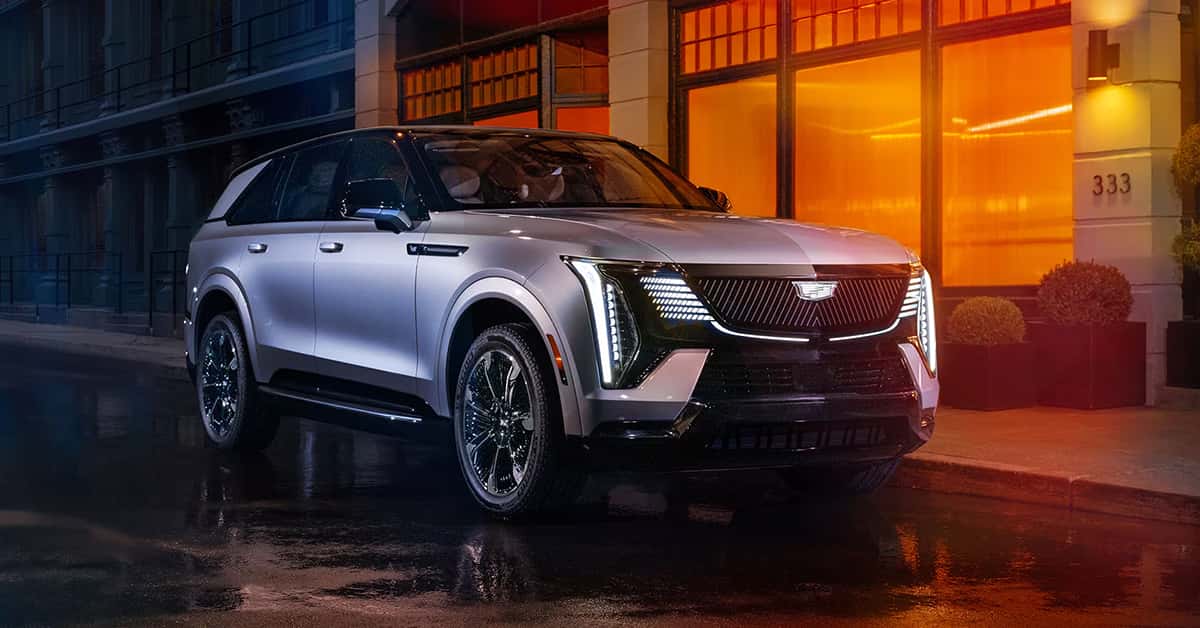
At Tustin Cadillac, we’re proud to serve drivers from Norco, Yorba Linda, Fullerton, Anaheim, and throughout Southern California with a full suite of Cadillac services—from sales and maintenance to parts and EV expertise. As electric driving becomes the new standard of luxury, our mission is to help every driver understand the technology that powers their Cadillac. Whether you’re curious about the latest innovations in electric mobility or want to explore the 2026 lineup in person, our team is here to guide you.
Cadillac’s electric transformation is built on precision and performance, but one question continues to surface: Do Cadillac EVs use LFP batteries? The answer reveals how Cadillac’s engineering sets itself apart from the rest. While many automakers are turning to LFP (Lithium Iron Phosphate) chemistry for affordability, Cadillac relies on its Ultium platform and advanced Nickel-Cobalt-Manganese-Aluminum (NMCA) chemistry for maximum range and luxury.
Let’s explore how Cadillac battery chemistry works, why it matters, and what it means for the future of electric luxury.
Does Cadillac use an LFP Battery for their EVs?
No, Cadillac does not use LFP batteries for their EVs.
Cadillac has built its reputation on craftsmanship and innovation. The brand’s shift to electric power doesn’t change that—it elevates it. The Ultium battery platform represents Cadillac’s approach to electric luxury: power, performance, and precision.
For drivers across Norco, Yorba Linda, Fullerton, and Anaheim, this means access to EVs that deliver long range, fast charging, and refined performance. Cadillac’s lineup—featuring the Lyriq, Optiq, Vistiq, and Escalade IQ—proves that going electric doesn’t mean giving up luxury or excitement.
But it also raises an important question: what type of battery makes all this possible? Cadillac’s decision to use NMCA chemistry reflects its dedication to creating vehicles that meet high expectations for performance and comfort.
Understanding Cadillac’s Current Battery Chemistry
Every electric vehicle depends on its battery chemistry—the blend of metals that determines how it stores and delivers power. Cadillac EVs are built on GM’s Ultium platform, which uses Nickel-Cobalt-Manganese-Aluminum (NMCA) cells. This chemistry provides high energy density, meaning more miles per charge without adding excess weight.
Current Cadillac models like the Lyriq, Optiq, Vistiq, and Escalade IQ all rely on this advanced chemistry. It gives them a clear edge in performance and range compared to vehicles using lower-cost LFP batteries.
Key benefits of NMCA chemistry include:
- Higher energy density for greater driving range
- Stronger acceleration and power delivery
- Efficient cooling and thermal management
- Balanced longevity and performance
These attributes align with Cadillac’s luxury goals—power that feels smooth and consistent, backed by refined driving manners.
What Is an LFP Battery and Why It Matters
LFP stands for Lithium Iron Phosphate, a battery chemistry known for its stability, safety, and long life. It has become a popular choice for affordable EVs because it costs less to produce and lasts for many charging cycles. However, it typically delivers less power and range than NMCA or NMC (Nickel-Manganese-Cobalt) batteries.
To better understand the LFP vs NMC Cadillac discussion, here’s a side-by-side comparison:
| Feature | LFP Battery | NMC/NMCA Battery |
| Cost | Lower | Higher |
| Energy Density | Lower | Higher |
| Safety | Excellent | Very Good |
| Cold Weather Performance | Weaker | Stronger |
| Common Use | Budget EVs | Premium EVs |
LFP batteries shine in affordability and stability, but NMCA chemistries lead in performance, range, and refinement—the very traits that define Cadillac.
Why Cadillac EVs Use NMCA Instead of LFP
Cadillac’s mission is simple: deliver the best in performance and luxury. The brand’s Ultium battery platform makes that possible by using NMCA chemistry, not LFP. GM has a two-tier battery strategy—using LFP batteries for mass-market EVs like the Bolt or Equinox EV and NMCA for high-end models like the Lyriq, Optiq, Vistiq, and Escalade IQ.
The reason is clear:
- Performance: NMCA batteries provide stronger acceleration and higher power output.
- Range: Cadillac EVs deliver 300–400 miles per charge, ideal for daily use or long drives.
- Luxury experience: The smooth power delivery and refined operation match Cadillac’s premium design goals.
This approach ensures that every Cadillac EV reflects its brand’s core values—precision, power, and prestige.
GM’s Plans for LFP Batteries and What It Means for Cadillac
While Cadillac continues to lead with NMCA chemistry, GM is expanding its use of LFP batteries for other vehicle lines. The company is investing in U.S.-based battery production and partnering with Samsung SDI to lower EV costs and increase supply flexibility. Future GM vehicles—especially affordable models—will likely use LFP batteries for cost efficiency.
Cadillac, on the other hand, is expected to maintain its NMCA focus while possibly integrating LFP elements in future hybrid systems or lower-trim EVs. This flexibility is part of the Ultium platform’s design—it supports multiple Cadillac cell types, allowing engineers to optimize performance or cost depending on the model.
Performance Implications: LFP vs NMC for Cadillac Drivers
Drivers across Norco, Fullerton, Anaheim, and Yorba Linda want an EV that performs as beautifully as it looks. That’s where LFP vs NMC Cadillac comparisons become relevant.
Here’s how Cadillac’s NMCA batteries stack up:
| Model | Battery Chemistry | Range | Charging Speed | Key Benefit |
| Lyriq | NMCA | 300+ miles | Fast DC charging | Range + refinement |
| Optiq | NMCA | TBD | Fast | Compact luxury performance |
| Vistiq | NMCA | TBD | Fast | Family EV practicality |
| Escalade IQ | NMCA | 400+ miles | Ultra-fast | Power and prestige |
Cadillac’s battery chemistry delivers strong, consistent performance across all conditions, even in the hot Southern California climate.
LFP Battery Benefits and Why GM Still Pursues Them
Even though Cadillac does not currently use LFP chemistry, GM recognizes its many strengths. The LFP battery benefits are well-suited for affordable, high-volume EVs and certain use cases.
Benefits of LFP batteries include:
- Lower production costs and reduced reliance on rare metals
- Excellent thermal stability and safety
- Long cycle life—thousands of charge/discharge cycles
- Simple recycling and minimal environmental impact
These traits make LFP batteries ideal for budget-conscious drivers or fleets, but Cadillac’s focus remains on delivering the top-tier performance that luxury customers expect.
What Future Cadillac EVs Could Gain from LFP Technology
Looking ahead to 2026 and beyond, Cadillac could leverage LFP technology in strategic ways. As Cadillac cell types evolve, engineers may explore hybrid battery systems—mixing NMCA and LFP modules for a balance of power and longevity.
This approach could offer:
- Enhanced affordability: Lower entry costs for future EVs.
- Longer lifespan: Ideal for daily commuting or rideshare use.
- Energy diversity: Flexibility to meet different customer needs.
In Southern California, where EV adoption continues to grow, such versatility could attract buyers in Anaheim, Yorba Linda, and Fullerton who value efficiency and sustainability.
Frequently Asked Questions About Cadillac EV Batteries
Drivers often have questions about how Cadillac’s battery technology compares to other EVs. Here are clear, direct answers to the most common ones.
What is an LFP battery and how does it differ from NMC?
An LFP battery uses lithium iron phosphate chemistry, offering lower cost and longer life but less range and power than NMC or NMCA batteries.
Which Cadillac EVs use LFP chemistry?
None currently. Cadillac models like the Lyriq, Optiq, Vistiq, and Escalade IQ use NMCA chemistry through GM’s Ultium platform.
What are the pros and cons of LFP cells?
LFP cells are cost-efficient, stable, and long-lasting but have lower energy density and reduced cold-weather performance.
How does LFP affect charging speed and lifespan?
LFP batteries typically charge more slowly than NMCA but last through more charge cycles, making them ideal for durability-focused EVs.
Will Cadillac expand LFP use across its EV lineup?
Cadillac may explore LFP chemistry in future EVs, but its current focus remains on NMCA for premium performance and luxury range. These answers help clarify Cadillac’s engineering direction and show how its battery choices shape the driving experience.
Explore Cadillac EV Technology at Tustin Cadillac
Understanding Cadillac’s battery technology is key to getting the best out of your Cadillac EV, and Tustin Cadillac is here to help. Our experts can explain the differences between LFP and NCM battery chemistries, show you which Cadillac models use each type, and help you choose the one that fits your needs. If you’re in Norco, Yorba Linda, Fullerton, or Anaheim, we invite you to stop by and explore our expanding lineup of electric luxury vehicles.
To get started, browse our new Cadillac EV inventory, or head to our finance application page to get preapproved before your visit.
You can also continue your learning journey by checking out our other EV-focused resources—learn more about how drivetrain configurations affect efficiency, how tire pressure influences your range, and the average pricing and ownership costs of Cadillac EVs.
For expert guidance or to experience a Cadillac EV firsthand, contact Tustin Cadillac today.
Get Directions to Tustin Cadillac
Disclaimer: All information is provided for general informational and entertainment purposes only. While we strive for accuracy, we cannot guarantee that all content is complete, current, or error-free. Any reliance you place on such information is strictly at your own risk. This article may include opinions and is not endorsed by, or officially affiliated with, any vehicle manufacturer or brand. Always consult official sources – such as the vehicle’s owner’s manual, authorized dealerships, or certified professionals – for the most up-to-date and personalized information.
0 comment(s) so far on Do Cadillac EVs have an LFP Battery? [2026]