

Escalade vs Escalade ESV vs Escalade IQL [2026 Guide]
The Cadillac Escalade, Escalade ESV, and Escalade IQL offer three approaches to full-size luxury SUV ownership. Generally, the standard Escalade uses a gasoline V8 and delivers a balance of passenger space and manageable full-size proportions. The Escalade ESV extends the body to provide more cargo capacity, while the all-electric Escalade IQL combines a longer body with dual-motor all-wheel drive and battery-powered performance. Choosing between them depends on how much space you need, whether you prefer gasoline or electric power, and how you plan to use the vehicle. Contact our team at Tustin Cadillac so we can help you compare these models and review the configurations available for your needs.
At Tustin Cadillac, we work with drivers from Tustin, Irvine, Santa Ana, and Orange who are considering a luxury SUV for family travel, daily driving, and longer journeys. If you’re deciding between the Cadillac Escalade vs. ESV vs. IQL, contact us so our team can explain the differences in size, range, seating, cargo capacity, and ownership considerations.
What Is the Main Difference Between the Escalade, ESV, and IQL?
The standard Escalade and Escalade ESV are gasoline-powered luxury SUVs, while the Escalade IQL is fully electric. The ESV is the extended-length version of the traditional Escalade, designed to provide additional cargo room. The IQL is an extended-length electric SUV with its own dimensions, battery-electric powertrain, and seating layout.
The 2026 models differ in several key ways:
- Escalade: Gasoline-powered, three rows, up to eight passengers, approximately 211.9 inches long
- Escalade ESV: Gasoline-powered, extended body, up to eight passengers, approximately 226.9 inches long
- Escalade IQL: Fully electric, dual-motor AWD, up to seven passengers, approximately 228.5 inches long
The gasoline-powered Escalade and ESV use a 6.2-liter V8 producing 420 horsepower and 460 lb-ft of torque in standard configurations. The 2026 Escalade IQL offers Cadillac-estimated output of up to 750 horsepower and 785 lb-ft of torque when Velocity Max is activated.
These vehicles share the Escalade name and a focus on luxury, but they are designed for different priorities. The standard Escalade may suit drivers who want the traditional V8 experience in a slightly shorter body. The ESV emphasizes cargo capacity, while the IQL appeals to drivers ready for an all-electric full-size SUV.
How Do the Escalade, ESV, and IQL Compare in Size?
Exterior dimensions affect parking, garage fit, passenger room, and cargo capacity. The standard Escalade is approximately 211.9 inches long. The ESV measures approximately 226.9 inches, while the IQL measures approximately 228.5 inches. That makes the ESV and IQL roughly 15 to 17 inches longer than the standard Escalade. The difference can be meaningful when maneuvering through tight parking areas or fitting the vehicle into a home garage.
Before selecting a model, consider:
- Garage length and door clearance
- The width of your parking space
- How often you park in crowded lots or urban areas
- How many passengers usually travel with you
- How much luggage or equipment you carry
- Whether you need space behind the third row
A test drive can help you understand how each vehicle feels from the driver’s seat. If you frequently park in tight spaces around Tustin, Irvine, or Santa Ana, compare the visibility systems and available parking assistance on each model.
Which Escalade Offers the Most Cargo Space?
Cargo capacity is one of the most important differences between these full-size SUVs. The standard 2026 Escalade offers up to 120.5 cubic feet of maximum cargo space with the passenger seats folded.
Generally, the Escalade ESV offers up to approximately 142.2 cubic feet, giving it a significant advantage for carrying large loads. Meanwhile, the Escalade IQL has a different storage layout because it is an electric vehicle. Published 2026 specifications list up to 125.2 cubic feet behind the first row and an eTrunk with up to 12.2 cubic feet of storage.
Cadillac also lists up to 75.4 cubic feet behind the second row and 24.2 cubic feet behind the third row. These figures are not perfectly interchangeable because the IQL has an additional front storage compartment and uses a different powertrain layout. When comparing the models, look at the amount of space available in the seating configuration you use most often.
For example, if you regularly travel with seven or eight people and their luggage, the cargo area behind the third row may be more important than maximum cargo capacity with the seats folded. If you often transport furniture or bulky equipment, the ESV’s maximum cargo space may be particularly appealing.
The best approach is to compare the actual cargo dimensions and test how your usual luggage or equipment fits inside the vehicle.
How Does Electric Range Compare With Gasoline Driving Range?
The Escalade IQL has a Cadillac-estimated driving range of up to 460 miles on a full charge for the 2026 model. This estimate is based on the manufacturer’s testing and may differ from real-world results.
Temperature, speed, terrain, load, and climate-control use can all affect range. The gasoline-powered Escalade and ESV do not have a single electric range figure because they use a combustion engine. Their driving range depends on fuel-tank capacity, fuel economy, and driving conditions.
Cadillac lists the standard 6.2-liter V8 Escalade at EPA-estimated 15 mpg city and 19 mpg highway in a rear-wheel-drive configuration, with different ratings possible for other drivetrains and trims. For a driver who frequently travels long distances, gasoline refueling may be convenient because it can be completed quickly at widely available stations.
The Escalade IQL offers the advantages of electric driving, but its practicality depends partly on access to charging at home, work, or along travel routes.
When comparing the Escalade gas vs. electric experience, ask yourself:
- Can you charge the IQL at home?
- How often do you travel beyond your usual daily range?
- Are public fast chargers convenient for your regular routes?
- Do you prefer gasoline refueling or charging during longer stops?
- How much of your driving involves highway speeds?
- Are you prepared to plan charging stops on longer trips?
For daily commuting around Orange County, charging access may make electric ownership convenient. For frequent long-distance travel through areas with limited charging infrastructure, a gasoline-powered Escalade may better fit some drivers’ routines.
How Do Performance and Towing Capabilities Compare?
The standard Escalade and Escalade ESV use a 6.2-liter V8 producing 420 horsepower and 460 lb-ft of torque in standard configurations. The gasoline powertrain provides familiar refueling and driving characteristics, and both models offer substantial towing capability when properly equipped.
The 2026 standard Escalade can tow up to 8,100 pounds in a properly equipped configuration, while the ESV’s maximum rating depends on its configuration and equipment. Drivers should always consult the specific vehicle’s towing documentation, payload limits, and trailering requirements.
The Escalade IQL takes a different approach with a dual-motor electric powertrain and available Velocity Max. Cadillac estimates up to 750 horsepower and 785 lb-ft of torque with that setting enabled. The immediate response of electric motors can make acceleration feel different from a gasoline V8.
However, power output alone does not determine which vehicle is best for towing. Trailer weight, tongue weight, payload, range impact, charging access, and the vehicle’s published trailering rating all matter. Towing can also reduce an EV’s driving range substantially, so anyone planning to tow with an electric SUV should account for the added energy use and charging needs.
What Technology and Luxury Features Do They Share?
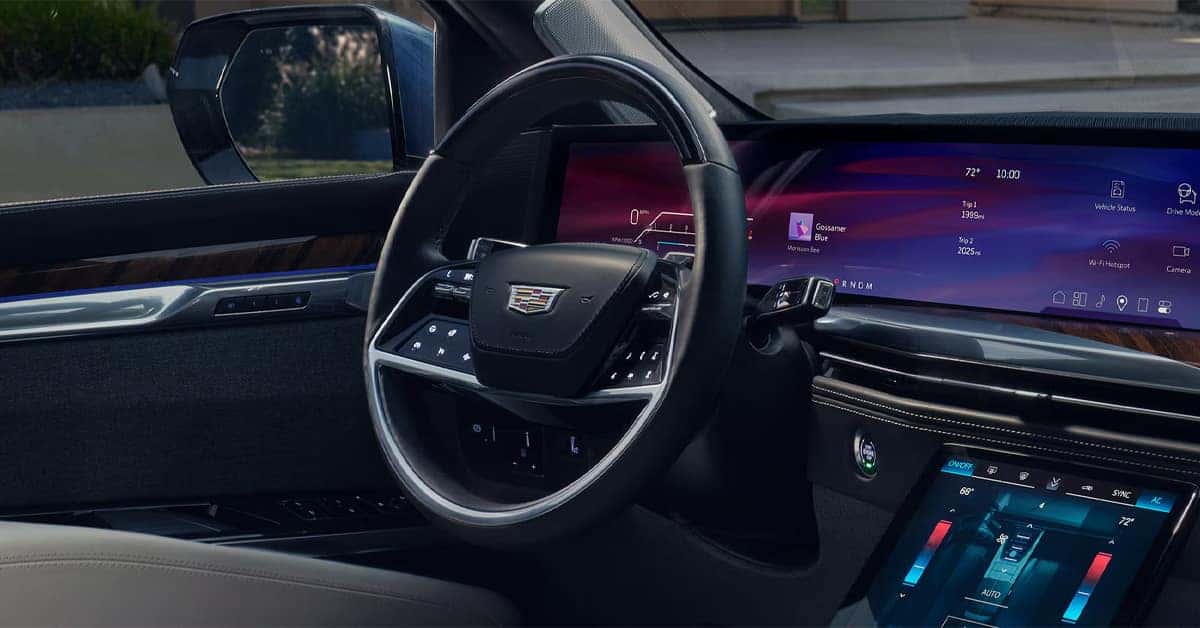
All three models emphasize a premium cabin, advanced displays, and driver-assistance technology. Depending on trim and configuration, equipment can include a large Horizon Display, connected infotainment, premium AKG audio, available executive second-row seating, and Super Cruise driver-assistance technology.
The exact features vary across gasoline and electric models. For example, the Escalade IQL’s electric powertrain and charging systems add EV-specific information and functions. Gasoline Escalade models include features and controls suited to their combustion powertrain.
When comparing the vehicles, consider which features matter most to your household:
- Infotainment and smartphone connectivity
- Rear-seat entertainment options
- Premium audio
- Heated, ventilated, or massage-equipped seats
- Parking cameras and assistance systems
- Driver-assistance technology
- Storage solutions and cabin layout
If you travel with children or frequently carry passengers, try the second and third rows in person. Evaluate how easy it is to access the seats, how much room passengers have, and how well the cabin accommodates their belongings.
How Do the Escalade, ESV, and IQL Compare in Price?
Pricing depends on model year, trim, powertrain, equipment, and dealer pricing. The standard gasoline Escalade generally has a lower starting price than the all-electric IQL, while the ESV’s extended body can also affect pricing compared with the standard Escalade.
Manufacturer starting MSRPs are useful for initial comparisons, but they do not necessarily reflect the final price of a specific vehicle. Options, destination charges, taxes, title, registration, and dealer fees can affect the total.
When comparing the models, evaluate the full ownership picture:
- Initial purchase price
- Financing or lease terms
- Fuel or electricity costs
- Maintenance and tire expenses
- Insurance
- Charging equipment and installation for an EV
- Expected driving mileage
- Your intended ownership period
The Escalade IQL may appeal to drivers who want electric performance and the experience of a full-size luxury EV. The gasoline Escalade and ESV may better suit drivers who prefer traditional refueling or require the particular towing and travel flexibility of a combustion-powered SUV.
Tustin Cadillac can help you compare available configurations, review pricing, and explore financing or lease options for eligible vehicles.
Which Escalade Is Best for Daily Driving and Long Trips?
The best model depends on your travel habits and the trade-offs you are willing to make.
Choose the Standard Escalade If You Want a Gasoline V8 in a Slightly Shorter Body
The standard Escalade is worth considering if you want a full-size luxury SUV with a V8 engine, three rows, and less overall length than the ESV or IQL. It can be a practical balance for families who need substantial space but do not require the extended body.
Choose the Escalade ESV If Cargo Capacity Is a Priority
The ESV is a strong candidate for households that frequently carry luggage, recreational equipment, or bulky items. Its extended body provides the greatest maximum cargo capacity of these three models, making it particularly useful for travel with both passengers and gear.
Choose the Escalade IQL If You Want a Full-Size Electric SUV
The IQL is designed for drivers who want a fully electric powertrain, long manufacturer-estimated range, and an extended luxury SUV body. It can be attractive for drivers who have reliable charging access and want the acceleration and quiet operation associated with electric driving.
Before deciding, consider how the vehicle will be used on an ordinary weekday, not only during an occasional road trip. Daily passenger count, garage space, charging access, and cargo requirements often reveal which model is the most practical choice.
What Should You Test Before Choosing an Escalade?
Because all three vehicles are large, a thorough comparison is useful. Sit in each row, examine cargo access, and consider how the vehicle will fit into your everyday routine. A practical comparison checklist includes:
- Check the driver’s seating position and outward visibility
- Test the rear-seat access and available passenger room
- Compare cargo space with the third row in use
- Evaluate parking aids and camera systems
- Review powertrain and drivetrain options
- Compare towing specifications if you plan to tow
- For the IQL, consider home charging and public charging access
- Review current pricing and available financing or lease terms
If you are moving from a smaller SUV, the size of any Escalade may take adjustment. A test drive can help you assess steering, turning, braking, and parking before committing to a vehicle.
What is the main difference between the Escalade, Escalade ESV, and Escalade IQL?
The standard Escalade is a gasoline-powered full-size SUV, the ESV is its extended-length gasoline version with more cargo space, and the IQL is an extended-length, fully electric SUV with dual-motor AWD and seating for up to seven.
How does the Escalade IQL’s range compare to the gas-powered Escalade and ESV?
The 2026 Escalade IQL has a Cadillac-estimated range of up to 460 miles per charge. Gasoline Escalade models use fuel economy and tank capacity to determine driving range, which varies with configuration and driving conditions. The two range measures should not be compared directly without accounting for charging or refueling needs.
Which Escalade offers the most interior space?
The Escalade ESV offers the greatest maximum cargo capacity among these models, with up to approximately 142.2 cubic feet. The IQL offers its own flexible storage layout, including a front eTrunk, so the best choice depends on passenger seating and how you intend to use the cargo area.
Is the Escalade IQL a better fit for daily driving vs. long trips?
The IQL can work well for daily driving when charging is convenient, and the vehicle’s range fits your routine. Long trips are also possible, but they require charging planning. A gasoline Escalade or ESV may suit drivers who prefer conventional refueling or frequently travel routes with limited charging access.
How do the Escalade, ESV, and IQL compare in price?
Pricing varies by trim, powertrain, equipment, and dealer pricing. The standard Escalade generally has a lower starting price than the electric IQL, while the ESV’s extended body affects its price relative to the standard model. Check current listings for accurate vehicle-specific pricing.
Compare Escalade Models at Tustin Cadillac
The standard Escalade, Escalade ESV, and Escalade IQL each offer a different combination of size, powertrain, and cargo flexibility. Whether you prioritize a traditional V8, maximum cargo room, or fully electric luxury, Tustin Cadillac can help you compare the available options and review their ownership considerations. Contact our team or visit our dealership in Tustin to explore current inventory and arrange a test drive. We serve drivers from Irvine, Santa Ana, Orange, and surrounding Orange County communities.
As you compare Escalade models, you may also want to learn more about Cadillac’s advanced features and other vehicles. Our guide to using the Night Vision Camera explains how the technology works and what drivers should know when using it. If a luxury midsize SUV is also on your shopping list, our comparison of the Cadillac XT5 and Lexus RX offers a closer look at how the two models compare in comfort, performance, and practicality. For shoppers considering an all-electric family vehicle, our comparison of the Cadillac VISTIQ, Kia EV9, and Volvo EX90 explores key differences among three-row electric SUVs.
Our team at Tustin Cadillac can help you explore our new inventory, find the best financing options, and compare gas-powered or electric Cadillac options for your needs in Tustin, Irvine, Santa Ana, and Orange.
Get Directions to Tustin Cadillac
Disclaimer: All information is provided for general informational and entertainment purposes only. While we strive for accuracy, we cannot guarantee that all content is complete, current, or error-free. Any reliance you place on such information is strictly at your own risk. This article may include opinions and is not endorsed by, or officially affiliated with, any vehicle manufacturer or brand. Always consult official sources – such as the vehicle’s owner’s manual, authorized dealerships, or certified professionals – for the most up-to-date and personalized information.
0 comment(s) so far on Escalade vs Escalade ESV vs Escalade IQL [2026 Guide]